
RUBBER MOUNT
RUBBER MOUNT
RUBBER MOUNT
RUBBER MOUNT
Rubber Mounts – Vibration Dampers & Shock Absorbers
Rubber mounts are simple parts that stop machines from shaking. They absorb shock and reduce noise. This helps machines run smoothly.
For example, car engines use Anti-vibration mounts. The mounts hold the engine in place and reduce vibration while driving.
Factories also use Anti-vibration mounts under motors, pumps, and compressors. These mounts keep heavy machines steady during operation.
In short, Anti-vibration mounts protect machines. They reduce bumps, limit vibration, and improve performance.
Anti-vibration mounts sit between a machine and its frame. Manufacturers usually make them of rubber with metal ends.
When the machine shakes, the rubber bends and absorbs the vibration. This reduces the amount of movement passed to the frame or floor.
As a result, the machine runs quieter and stays more stable. It also helps protect nearby equipment.
For example, a motor installed on Anti-vibration mounts vibrates much less than one bolted directly to the floor.
Anti-vibration mounts have many benefits. First, they reduce vibration and noise during machine operation. This helps create a safer and quieter work environment.
They also absorb shocks. As a result, they protect machines from damage. Less shock means fewer breakdowns and lower repair costs. This helps machines last longer.
In addition, many Anti-vibration mounts resist oil and grease. They designers built them for tough use, and they keep working without issues.
Anti-vibration mounts are also easy to install. Overall, they improve machine safety, stability, and reliability.
Key Benefits:
Absorbs Shocks: Rubber soaks up impacts to protect machines. Reduces Noise: Vibration isolation makes machines run quieter. Longer Life: Machines last longer because the mounts protect them. Oil-Resistant: Special rubbers (like neoprene) resist oil and grease. Easy to Install: Mounts screw or bolt on with little effort.Types of Rubber Mounts:
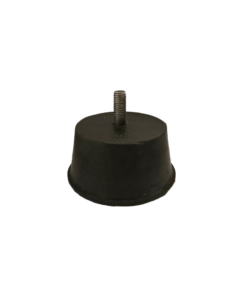
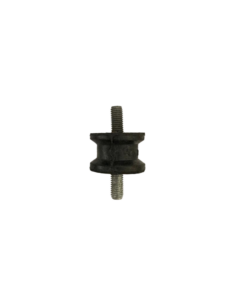
H- and T-Mounts: These look like a bar (H) or block (T) with threaded ends. They handle heavy shocks. GMT says they “offer a good level of shock protection”. You find them under engines and large machines. Rubber Bobbin Mounts: Small round mounts used as feet or bumpers. They have a rubber cylinder with threads. Bobbin mounts cushion in all directions and go under generators and compressors. Sandwich Mounts: Two metal plates with rubber in the middle. The plates spread the load and the rubber layer dampens vibration. Sandwich mounts function in all directions and people use them in engines, pumps, and HVAC equipment. Conical Mounts: Shaped like a rubber cone with metal washers top and bottom. They handle forces down and sideways. Conical mounts are strong and used under car engines and boat engines. Machine Feet: Adjustable feet with a rubber pad at the bottom. They support and isolate smaller machines like printers or racks. Wire Rope Mounts: Coiled metal cables around a rubber core. They resist rust and soak up high vibration. Used on ships, trains, and heavy vehicles.Where to Use Rubber Mounts:
Automotive: Cars and trucks use Rubber isolators under engines and gearboxes. This stops engine vibration from shaking the vehicle. Mounts also go under pumps and exhaust parts. Industrial Machines: Factories use Rubber isolators under pumps, generators, compressors, and motors. The mounts soak up heavy vibration. For example, a generator on rubber mounts runs quieter than one on a hard base. Without mounts, machines would shake and wear out. Marine: Boats use rubber mounts for engines and generators. These mounts stand up to oil and water. On a boat, Rubber isolators keep the engine steady even on rough water. Electronics & Appliances: Even small devices use rubber isolation. Hard drives, servers, and lab machines may sit on rubber pads. Home appliances like washing machines use rubber feet to stay steady and quiet. Construction: Heavy tools like jackhammers and drills use tough rubber mounts. These mounts soak up significant impacts. Without them, the machines would shake apart. Others: Airplanes, trains, and military equipment use Rubber isolators too. They reduce vibration and shock, keeping delicate instruments safe.Choosing the Right Rubber Mount:
Know the Weight: Check the machine’s weight. Heavy machines need stronger mounts. Use enough mounts to share the weight. For example, if a machine is 200 kg and uses four mounts, each mount carries about 50 kg. Check Vibration: Notice how the machine moves. If it shakes up-down and side-to-side, use mounts that absorb motion in all directions. If it mainly moves up-down, a cone mount might work well. Match the Size: Make sure the mount’s bolts or holes fit your machine. Mounts come in different sizes and thread types. Pick one that matches. Consider Conditions: If the machine is hot, oily, or outdoors, pick the right rubber. For oily spots, use neoprene mounts. For high heat or cold, use special rubber (like silicone). Check the mount’s temperature rating. Vibration Speed: For fast, light vibrations, softer mounts work better. For slow, heavy shakes, stiffer mounts help. Number of Mounts: Use enough mounts to spread the load. If a machine is tall or uneven, use extra mounts.By following these steps, you pick a mount that fits your machine’s needs.
Installing Rubber Mounts:
Prepare: Clean the mounting points on the machine and base. Attach One Side: Screw or bolt one end of the mount into the machine’s mounting hole. Attach Other Side: Bolt the other end to the base or frame. Tighten: Use a wrench, but don’t overtighten. The rubber should still flex a bit. Check: Make sure the machine is level and the mount is not crooked. Test: Turn on the machine slowly. The rubber should compress slightly and cut vibration.Inspect mounts from time to time. If the rubber cracks or is extremely hard, replace it.
Rubber vs. Other Mounts:
Rubber vs Springs: Rubber mounts absorb and damp vibrations. Rubber flexes and turns vibration into a little heat, stopping bounce. Coil springs only isolate vibration; they let machines bounce up and down. Rubber isolators make machines stop moving faster. Fail-Safe: Many rubber mounts have metal parts that keep them in place even if the rubber breaks. Coil springs don’t do this; parts could drop out if a spring fails. Load: Rubber mounts work well for heavy loads and fast shakes. For slow, large motions, a robust spring or cable isolator might be better. Space: Rubber mounts usually take less room than large coil springs.In general, people choose Rubber isolators for their durability and damping. They suit most engines and machinery.
Rubber Mount Materials:
Neoprene: Common. Resists oil, grease, and weather. Good for engine areas. Nitrile: Resists oil and fuel. Used in fuel and oil systems. EPDM: Resists heat, ozone, sun, and water. Good for outdoor use. Silicone: Handles extreme high or low temperatures. Viton: Resists chemicals and high heat.Choose a mount with the right rubber for your conditions.
Rubber Hardness:
Rubber mounts can be soft or hard. Soft rubber is squishy and cushions light machines well. Hard rubber can hold heavy machines but gives less cushion.
Choose a softness that fits your machine. For example, a small motor can use a soft mount to damp vibration. A heavy motor needs a hard mount so it does not squash too much.
Everyday Examples:
Rubber mounts are in many common places. For instance, washing machines have rubber feet or pads to keep them from dancing around. Manufacturers make car engine mounts from rubber to keep your ride smooth.
Even a computer’s hard drive often sits on rubber pads to protect it from bumps. If you have a machine that rattles or moves too much, adding Rubber isolators will usually help.
What if I Skip Rubber Mounts?
Running a machine without rubber mounts can cause problems. The machine will shake more. This can make parts break faster. It can also make more noise.
For example, if a noisy generator had no mounts, you would hear a loud rumble. With mounts, the noise is much lower. So skipping mounts often means more repairs and louder machines.
Rubber Mount Sizes:
Rubber mounts come in many sizes. Some are tiny (just a few millimeters) and others are large (several inches). The size you need depends on the machine.
Always check the mount’s dimensions. Many sellers list both metric and inch sizes. Getting the wrong size can cause the mount to fail or not fit.
Types of Thread:
Rubber mounts come with different thread styles. Many have a male thread (a bolt sticking out) on one side and a female thread (a hole) on the other.
Some mounts have male threads on both ends, or a hole on both ends. Make sure to match the thread style: if your machine needs a bolt entering the mount, pick a female-thread mount. If your base needs a bolt, use a male-thread mount.
Choosing Mount Size:
Beyond weight, also pick the right height and diameter. The mount should fit the gap between the machine and its base.
Check the rubber body’s width. The bigger the rubber area, the more vibration it can absorb. But large, bulky mounts need more space. Measure carefully before buying.
Mount Type Best For Soft Rubber Light equipment, more cushioning Hard Rubber Heavy equipment, higher loads Large Footprint Machines with big feet Small Diameter Tight spaces or light-duty partsCompare Example:
Imagine a table with a box on it. If the box is light, putting it on a sponge will stop it from shaking.
But if the box is heavy, a thin sponge would squash. You would need a firmer pad. The same applies to rubber mounts.
Cost and Savings:
Rubber mounts are not expensive. However, they help save money over time. A good rubber mount often costs only a few dollars.
Without rubber mounts, machines can wear out faster. Parts may loosen or break. As a result, repairs and maintenance can cost much more.
In addition, rubber mounts reduce noise and vibration. This creates a quieter workspace. Workers feel more comfortable, and nearby neighbors stay happier.
For these reasons, spending a small amount on rubber mounts is a smart and cost-effective investment.
Simple Checks:
Before buying, measure your old mounts. This helps you choose the correct size.
Next, make sure you choose the correct thread type. Some mounts use metric threads. Others use inch threads.
If possible, test the fit before full installation. This avoids vibration issues later.
If you are unsure, ask a supplier for advice. Our customer service team can help you choose the right rubber mount for your machine.
Rubber vs Polyurethane:
Some vibration mounts are made of polyurethane instead of rubber. Polyurethane can be stronger and last longer under heavy loads, but rubber is cheaper and quieter. In most applications, engineers use rubber mounts for engines and motors because they work well.
Final Thoughts:
Rubber mounts are everywhere. The next time you see a quiet car or a smooth-running machine, rubber mounts are likely doing their job.
They may be small, but they play a crucial role. Rubber isolators protect machines by reducing vibration and noise. They work quietly and efficiently every day.
They are also a low-cost solution to significant challenges. Choosing the right rubber mount and keeping it in good condition makes a clear difference.
With the proper rubber mounts, machines run more quietly and last longer.
Here is a clearer, more readable version split into short paragraphs, using active voice and simple sentences:
Rubber mounts protect machines by absorbing shocks and reducing vibration. They act like cushions between the machine and the surface.
As a result, machines run quieter and last longer. Less vibration also helps protect nearby parts from damage.
Rubber isolators come in many shapes and sizes to fit different equipment needs. Each design ensures the machine runs safely and stays stable.
Explore our high-quality rubber mounts today. Our oil-resistant mounts last long and help machines run more quietly.